Jollity: A Magical Script Font for Handmade Creators
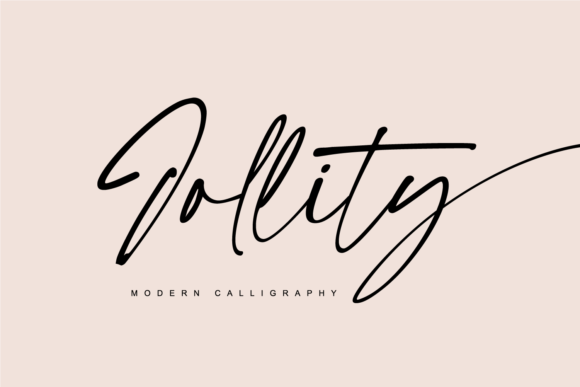
As someone who designs printable wall art, hand-stamped tags, and custom wedding invitations for my small shop, I know how much a single font can shape the feeling—and the sales—of a product. That’s why Jollity stands out in my font library. It’s not just another script font; it’s a carefully crafted typeface with elegance built in, soft curves that flow like ink on handmade paper, and a quiet confidence that says “thoughtful” without shouting. Whether you’re cutting vinyl for boutique soap labels or layering text on a digital planner cover, Jollity brings warmth and intention to every letter.
Jollity lives in the sweet spot between decorative and dependable. Its strokes have just enough contrast and rhythm to feel expressive—not fussy—and its spacing stays open enough to hold up beautifully at 12pt on a tea towel tag or 144pt on a farmhouse-style welcome sign. I’ve used it for candle jar labels (paired with a light sans serif for ingredients), birthday party printables (where the swashes add playful energy without overwhelming kids’ names), and even delicate foil-stamped wedding menus. Customers consistently comment on how “handwritten yet polished” everything looks—and that perception of quality directly supports higher perceived value.
Real Projects, Real Results
Here’s where Jollity shines most practically:
- Product labels & tags: Its clean entry and exit strokes cut cleanly on Cricut and Silhouette machines—even at 0.25" height. I use the standard lowercase for “Organic Lavender Soap” and switch to the alternate uppercase swash for the brand name above it. The PUA encoding means one click opens all alternates and flourishes, no workarounds needed.
- Invitations & stationery: For wedding suites, I set couple names in Jollity’s boldest swash variant, then pair dates and details in a neutral serif like Playfair Display. The contrast feels intentional, not accidental—and keeps readability high where it matters most.
- Digital printables: On planner stickers and habit trackers, Jollity’s subtle baseline variation adds charm without sacrificing scanability. I avoid using it for full paragraphs, but for headers like “Weekly Intentions” or “Gratitude List,” it sets the tone instantly.
- Seasonal crafts: Last holiday season, I layered Jollity over kraft paper gift tags (“To: Emma • From: Grandma”) and used the same font in a reversed-out version on red ceramic mugs. Same file, different context—same cohesive brand voice.
Readability Matters—Especially When You’re Cutting or Printing
Let’s be real: a gorgeous font is useless if your vinyl cutter skips a loop or your inkjet smudges fine terminals. Jollity avoids common script pitfalls—it has no ultra-thin hairlines, no overlapping glyphs that jam on low-res previews, and no overly tight kerning that collapses at small sizes. I test every new font at three critical points: 8pt on a product label mockup, 16pt on a sticker sheet preview, and 36pt on a printed invitation proof. Jollity passed all three. Bonus: its lowercase a, e, and o are distinct enough for quick visual scanning—critical when customers glance at a shelf of handmade bath bombs.
Smart Pairings, Seamless Workflow
Script fonts thrive in contrast. With Jollity, I almost always pair it with a clean, humanist sans serif—think Montserrat Light or Lato Regular—for body text, pricing, or care instructions. That combo works equally well on a Shopify product page, an Etsy listing banner, or a physical hang tag. If you want something softer, try pairing Jollity with a gentle serif like Cormorant Garamond—it gives vintage stationery depth without competing for attention. Avoid pairing it with other high-contrast scripts or ultra-bold display fonts; Jollity’s magic is in its subtlety, not its volume.
What’s Inside & How to Use It Right
Jollity is PUA encoded, which means every swash, alternate, and ligature lives at a predictable keyboard location—no digging through character maps or installing extra OTF files. You’ll find stylistic sets for beginning/ending flourishes, contextual alternates that automatically swap letters mid-word, and even a few surprise ligatures (like “Th” or “Qu”) that elevate formal phrases. It comes in standard OTF and TTF formats—fully compatible with Canva, Affinity Designer, Cricut Design Space, and Silhouette Studio. While it’s optimized for English-language projects, the basic Latin character set covers most European languages you’d use in craft packaging or multilingual greeting cards.
And yes—this is a commercial font, fully licensed for use in physical products, digital downloads, SVG files, templates, client work, and merchandise. As a seller, I double-check licensing before adding any font to my workflow. Jollity’s license explicitly permits selling items made with it—whether that’s printable planners on Etsy, heat-transfer vinyl shirts on my Shopify store, or custom SVG bundles for fellow crafters. No hidden restrictions, no attribution required—just clear, craft-friendly terms.
Why This One Stays Open on My Desktop
I keep Jollity open more than any other script font because it solves two problems at once: it delivers emotional resonance *and* production reliability. It makes a $4 sticker feel special. It helps a small-batch candle brand stand out next to mass-produced competitors. It turns “Happy Birthday” into something that feels written just for that person—not pulled from a template. In a market where handmade means *meaning*, Jollity doesn’t just dress up your words—it deepens them.